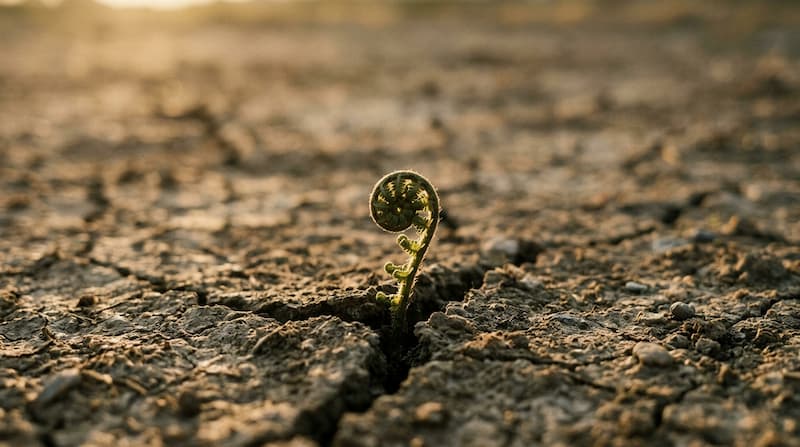
When Hannah Ritchie arrived at the University of Edinburgh to study environmental science, she was ready to save the planet. By the time she graduated four years later, she was ready to give up on it entirely. Lectures, headlines, and the general atmosphere of environmental academia had convinced her she was living through the final chapter. Then she found Hans Rosling — and everything changed.
Rosling was a Swedish physician who spent his career using data to show that the world was quietly, steadily getting better on almost every measure of human wellbeing, even as the headlines insisted otherwise. Ritchie read his work and felt something shift. If the data on health, poverty, and child mortality told a different story than the doom narrative — what about the environment?
That question became her career. She spent years at Our World in Data building the most comprehensive public datasets on climate, food systems, biodiversity, and pollution on the internet. Then she wrote Not the End of the World — a book that challenges not just what we think about the environment, but how we think about it.
The myth of the sustainable past
The first thing Ritchie does is dismantle the nostalgia.
Most environmental thinking is built on a story of decline — that there was once a healthier, simpler time and we have spent the last two centuries destroying it. Go back to the land. Eat the way your grandparents ate. Live small.
The data doesn’t support this. For most of human history, half the global population died before reaching adulthood. Forests were cleared by subsistence farming long before industrial agriculture arrived. Air quality in Victorian London was catastrophically worse than any city today. The idea that we have lost something sustainable is, in Ritchie’s words, simply not true. We have never met the needs of the present without compromising future generations. Not in 1850. Not in 1950.
This isn’t a reason for complacency. It is a reason to stop looking backwards for answers.
The world is much better; the world is still awful; the world can do much better.
— Max Roser, quoted throughout Not the End of the World
What the numbers actually show
Ritchie examines seven environmental crises in depth: air pollution, climate change, deforestation, food systems, biodiversity loss, ocean plastics, and overfishing. In each chapter she does the same thing — strips out the media narrative and goes straight to the longitudinal data.
Some of what she finds is genuinely surprising.
Global CO₂ emissions per person peaked around 2012 and have been declining since. Not fast enough — but the direction has changed. Solar energy costs have fallen by more than 90% in a decade. Wind energy by more than 70%. Battery costs have dropped 98% since 1990. Clean energy is now the cheapest electricity in history.
On biodiversity: tiger populations have doubled since 2003. Humpback whale populations have recovered by around 90% after the end of commercial whaling. These are not small numbers — they are proof that targeted action works.
On ocean plastics: most of the plastic entering the ocean comes from a relatively small number of rivers, the majority in Asia. This is not a reason to point fingers. It is a reason to target interventions where they will actually have impact.
Deaths from natural disasters are dramatically lower than a century ago, even as extreme weather events become more frequent. Early warning systems and better infrastructure have quietly saved millions of lives.
None of this means we are on track. Ritchie is clear that 1.5°C is almost certainly out of reach. Biodiversity loss is still accelerating in many regions. But there is a real difference between “serious and urgent” and “already over.” The data points firmly toward the first.
Why doom is the enemy of progress
This is where the book goes deeper than most environmental writing.
Ritchie argues that pessimism is not just a psychological problem — it is a strategic one. When people believe collapse is inevitable, they disengage. They stop voting for climate policy because what’s the point. They stop making personal changes because no individual action could possibly matter. The doom narrative licenses inaction from exactly the people who care most.
She calls this doomism, and she treats it as seriously as climate denial. Both lead to the same place: nothing gets done.
Her counter-argument is what she calls urgent optimism. Not the comfortable kind that says everything will work out on its own. The kind that says things are working — so keep working. The ozone hole is healing because governments made collective decisions in the 1980s. Acid rain no longer kills lakes across Europe because nations cooperated on sulfur emission standards. Neither was solved by waiting for disaster. Both were solved by people who believed the problem was worth solving.
We could be the first generation to build a sustainable planet. That depends on whether we believe it's possible.
— Hannah Ritchie, Not the End of the World
The leverage problem: what actually matters
The last third of the book is where Ritchie gets practical — and where she is perhaps most immediately useful.
Most sustainability communication fails here. It tells you to care, hands you a reusable bag, and sends you home. Ritchie instead ranks individual actions by actual carbon impact, and the results are clarifying.
The gap between the most impactful and least impactful personal choices is enormous. Plastic straws, reusable coffee cups, switching off lights — these barely register. The real levers are four: how much meat and dairy you eat, whether you drive and what kind, how your home is heated, and how often you fly.
Brazilian beef production alone accounts for an estimated 25% of global deforestation. Insulating your home and replacing a gas boiler with a heat pump can eliminate multiple tonnes of CO₂ per year. A single long-haul flight can wipe out months of careful daily choices. Meanwhile your phone charger, your paper versus plastic bags, your recycling habits — these matter far less than we’ve been led to believe.
This is not meant to produce guilt. It is meant to produce focus. We don’t need more people doing a little of everything. We need more people pulling the levers that actually move things.
Reading this in 2026
When Not the End of the World was published in early 2024, the energy transition was already scaling faster than most analysts had predicted. EV adoption was rising. Net forest loss in parts of the Amazon had begun to slow. The numbers were, cautiously, moving in the right direction.
That momentum has been uneven. But the book’s underlying argument has not weakened. The tools exist. The trajectory is better than the headlines suggest. What is still missing — and what Ritchie keeps returning to — is not technology or even policy. It is the collective belief that the work is worth doing.
Her deepest point is not about data. It is about what we owe the people who come after us. Not the obligation to fix everything. The obligation to keep trying, clearly and honestly, with the best evidence we have.
That’s not doom. That’s just work.
Browse the full Sustainability archive for more.